On March 9, 2026, the Black Mountain Town Council opened a public hearing on a parcel identified by little more than a tax number, PIN 0609-46-7498, known locally as Givens Highland Farms. The land was being pulled off the unincorporated county rolls and into town limits, rezoned at the same time from R-1 to a category that allows institutional and office use. The council approved both the annexation and the rezoning. Nobody at that meeting was buying a house on the parcel itself. But every property near it, on the same road, under the same ridgeline, now sits on one side of a boundary the town just redrew again.
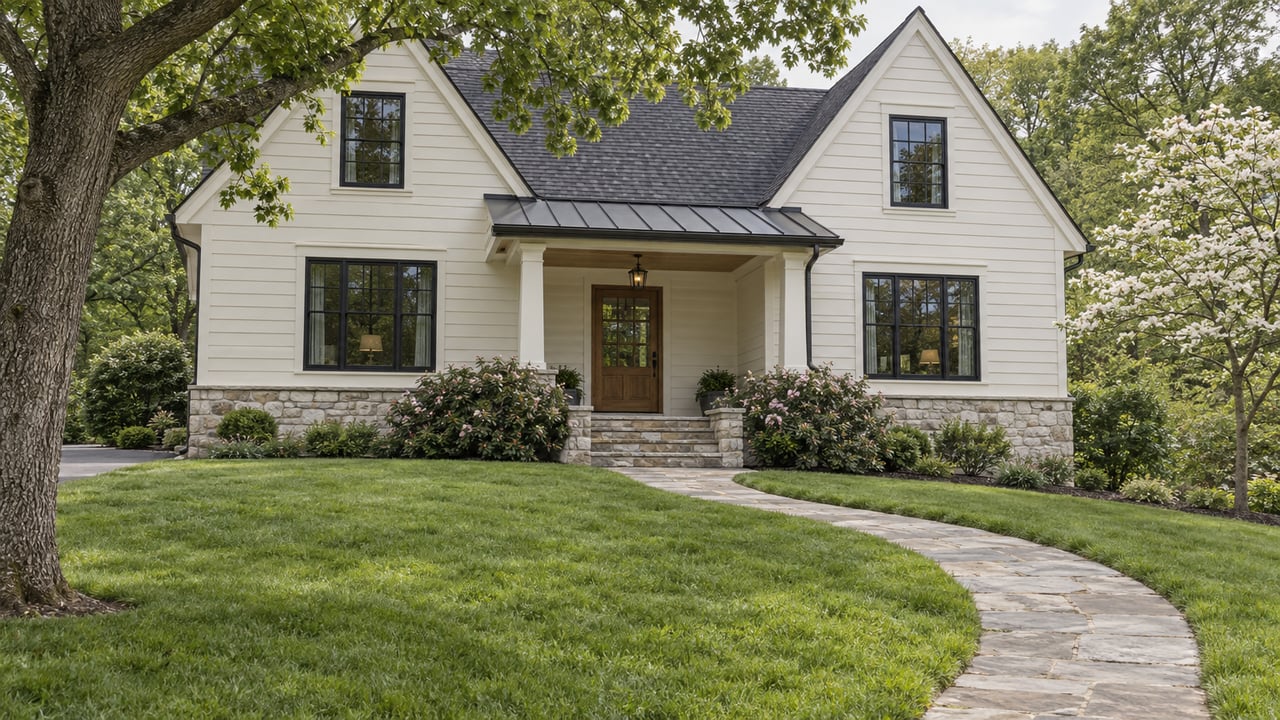
Walk five minutes in almost any direction from downtown Black Mountain and you will likely cross that boundary at least once. On one side, a home draws water from the Town's own system and sends its wastewater through the Metropolitan Sewerage District, and its owner pays the county tax rate plus a municipal rate on top. On the other side, a home with the same square footage sits on a private well and a county-permitted septic field, and its owner pays the county rate plus a fire district rate instead. The listing photos can look identical. The tax bill and the plumbing behind the walls will not be.
What The Line Actually Costs
Buncombe County's current rate table, set this July, puts the county rate at 61.54 cents per $100 of assessed value. The Town of Black Mountain adds its own municipal rate of 35.50 cents on top of that for anything inside town limits. Properties outside town limits that fall within the Buncombe County Unified Fire Service District pay the county rate plus a fire district rate of 17.38 cents instead of the town rate.
| Location | County Rate | Add-On | Combined Rate per $100 |
|---|---|---|---|
| Inside Town of Black Mountain | 61.54 cents | 35.50 cents (town) | 97.04 cents |
| Unincorporated, fire district | 61.54 cents | 17.38 cents (fire) | 78.92 cents |
Run those two combined rates against a home assessed at $400,000 and the gap comes out to roughly $725 a year, using this year's figures alone. That's not a penalty for living in town. It reflects the added services a municipal rate funds, from the town's own water utility to its police and public works departments, that a fire-district-only property doesn't draw on in the same way. The point isn't which side is the better deal. It's that the number changes based on a line most buyers never think to ask about, and that line has nothing to do with how the house looks from the road.
Same Mountain, Different Tap
The utility split matters as much as the tax rate, maybe more, because it shapes what a buyer inspects before closing and what they budget for afterward.
Inside town limits, Black Mountain runs its own water system, producing about 187 million gallons a year from 12 wells and distributing it through roughly 3,400 taps along 62 miles of water lines. The town also purchases about 30 percent of its water supply from the City of Asheville to round out demand. Sewer service comes through a partnership with the Metropolitan Sewerage District, which bills jointly with the town so residents get one combined statement instead of two. That system isn't static either. The town has a waterline relocation underway on Ninth Street this month, with Kemp Sigmon Construction Company handling the work and a planned service interruption that started September 21.
Outside town limits, the arrangement is different by design, not by neglect. A home there typically runs on a private well and a septic system, both permitted and inspected through Buncombe County Environmental Health rather than the town. Getting a well approved means a certified contractor submits a GW-1 Well Construction Record to the state, the county inspects the work and issues a Certificate of Completion, and the local health department then has 30 days to test the water for a defined list of chemical and bacterial parameters. A septic system follows its own path, starting with an Improvement Permit to confirm the site can support a system and an Authorization to Construct before installation begins.
None of that makes one setup better than the other. It does mean the due diligence looks nothing alike. A buyer touring a home on town water and sewer is checking tap fees and hookup status. A buyer touring a home on well and septic is asking for the GW-1 record, the Certificate of Completion, and current water test results, since that 30-day testing requirement applies at the time of construction, not at resale.
The Line Moves By Vote, Not By Geography
The Givens Highland Farms annexation is a reminder that this boundary isn't fixed the way a ridge or a creek is fixed. North Carolina allows landowners to petition for voluntary annexation into an adjacent town, and Black Mountain's council reviews these requests at public hearings much like any other agenda item. It happened again in March. It will likely happen again before the year is out.
That has a direct consequence for anyone comparing a property just outside town limits to one just inside. The version of the map a buyer pulls up today may not match the version in effect by closing, particularly for parcels near the town's edge where annexation requests tend to cluster. A property that shows as unincorporated county land in one quarter can show as inside town limits, subject to the town's rate and its water system, a few months later if a neighboring landowner's petition goes through and the parcel gets swept in with an adjustment to the boundary description.
Before You Write An Offer
A few steps translate all of this into something usable during a real transaction:
- Pull the parcel's current jurisdiction and zoning directly from the county's tax and GIS records, not from the listing description, since annexations can outpace how quickly a listing gets updated.
- If the listing claims town water or sewer, call the Town of Black Mountain's Water Administration office and the Metropolitan Sewerage District to confirm an active tap and account, rather than assuming service based on the address.
- If the property is on well and septic, request the GW-1 Well Construction Record and Certificate of Completion for the well, along with the Improvement Permit and Authorization to Construct for the septic system, from Buncombe County Environmental Health.
- Ask for the most recent water test results on any private well, since state-required testing is tied to the construction date, not the sale date, and older wells may not have been retested in years.
- Confirm the parcel's current combined tax rate before finalizing a monthly payment estimate, since a home a quarter mile away can carry a meaningfully different number.
A Few Questions Worth Asking Directly
Does a Black Mountain mailing address mean the home is inside town limits? Not necessarily. Mailing addresses and ZIP codes follow postal service boundaries, which don't always line up with the town's actual corporate limits. A property can carry a Black Mountain, NC address while sitting in unincorporated Buncombe County.
Can a homeowner request annexation after buying? Yes. Voluntary annexation petitions go through the same public hearing process the Givens Highland Farms parcel went through in March, and property owners near the town's edge can initiate one.
Will the tax rate change automatically once a parcel is annexed? Yes. Once a parcel is formally annexed, it becomes subject to the town's rate on top of the county rate starting with the following tax cycle, alongside access to town water and sewer where lines are available.
Buying near a boundary like this rewards a buyer who checks the parcel record before falling for the view. If you're comparing a specific address in Black Mountain and want a clear read on which side of that line it actually sits, reach out to HomesByJoellen and get your free home valuation before you write the offer, not after.